
Project Lead:

Nathan Podlich
Associate Engineer, Newcastle Office
Nathan, where did your idea come from?
The idea came out of discussions with Glen and Laxmi in the Newcastle Lab around some of the challenges of collecting reliable in-situ data out in the field, especially on soft tailings.
We’ve got a lot of people going out and completing shear vane testing and DCP testing, particularly on soft ground and tailings facilities. We felt there was an opportunity to collect more valuable and more consistent data.
The idea is that anyone who can walk out onto a tailings dam or other soft surface to perform a shear vane test or a DCP test by hand will be able to use this system instead.
Typically, you would need to do those manual tests before taking a CPT rig onto a soft surface, to make sure the rig isn’t going to sink. This system enables us to generate conventional CPTu results and associated correlations without the need to mobilise a conventional CPT rig.
What problem does it solve?
A conventional CPT is large and heavy and generally can’t access the same areas where people are comfortably walking out and performing shear vane tests. Our solution is a small and lightweight cone pushing system that can be transported in a ute and deployed at locations that would typically be inaccessible to larger equipment.
In the future, the platform could also be mounted on a small remote-controlled tracked vehicle, allowing us to undertake investigations without personnel needing to walk on soft ground.
Can you explain your process, any challenges or unexpected discoveries?
In the early stages, we considered:
- what loads we should expect,
- how powerful the motors would need to be,
- whether we could achieve those powers with small lightweight machinery,
- whether we’d enough power from the batteries,
- how many batteries we’d need, and
- how much everything would weigh.
A lot of the work has been mechanical design and assembly, but it’s also involved programming, electronics and building the control systems. It’s been enjoyable because it’s not just engineering calculations. There’s been programming, soldering, wiring everything together and physically building something from scratch.
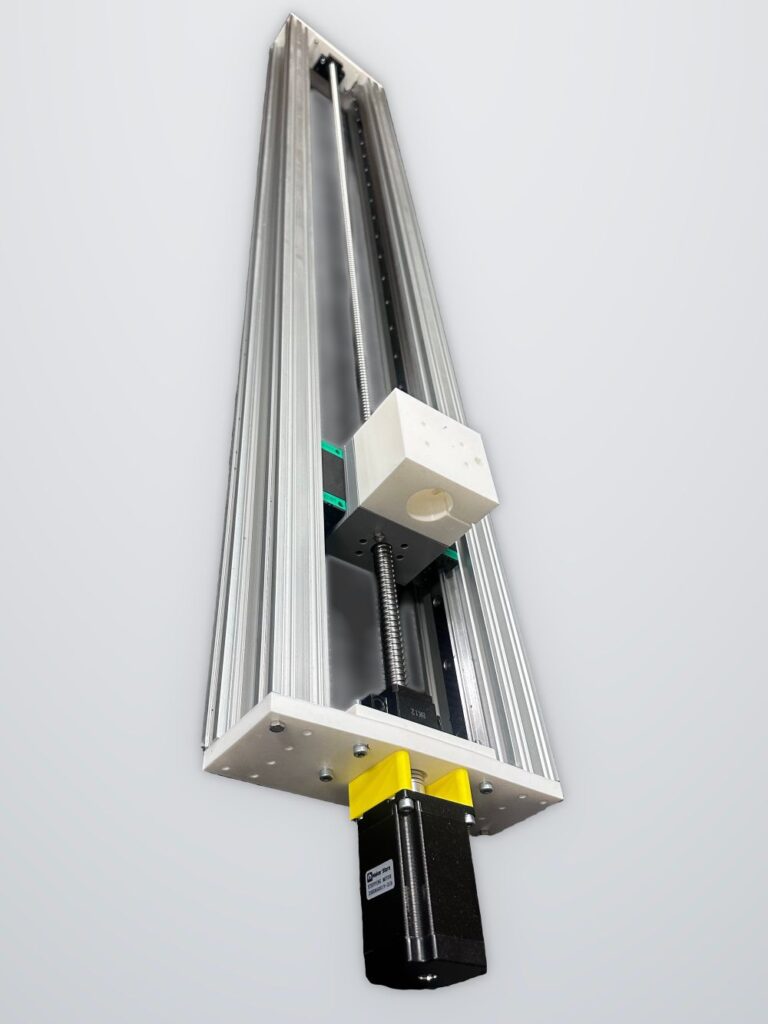
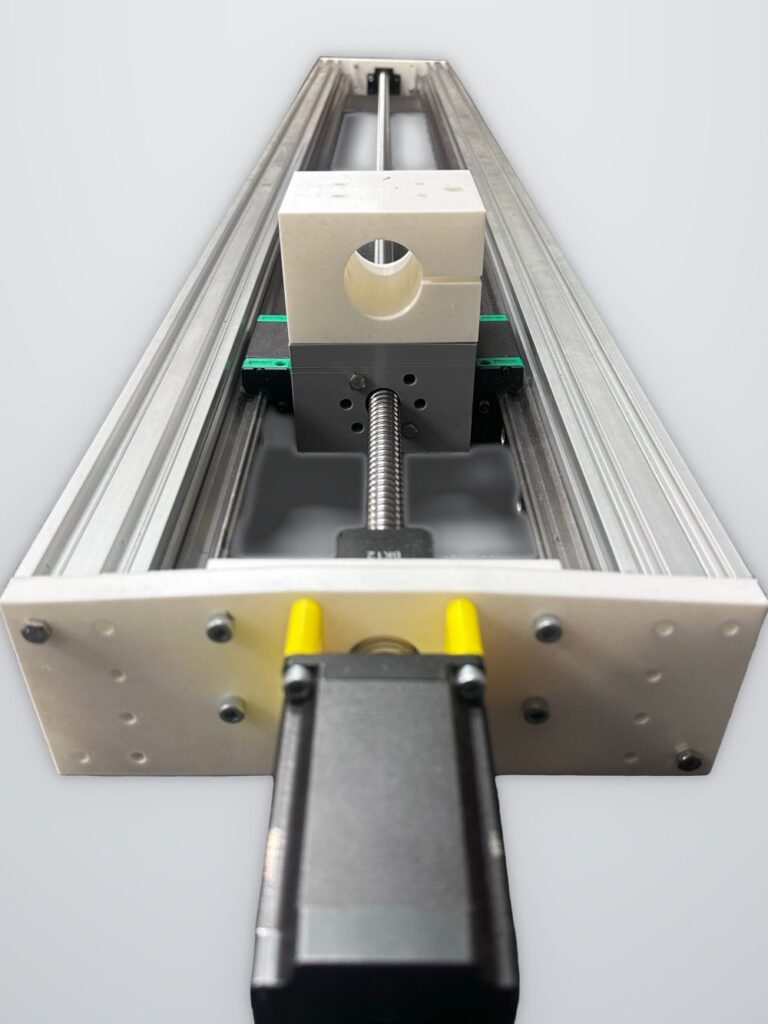
The prototype is essentially a cone pusher. It’s a linear actuator, so an electric motor is connected to a threaded rod with guide rails to make sure everything stays aligned. A bracket then transfers that movement to the CPT rod and pushes the cone into the ground.
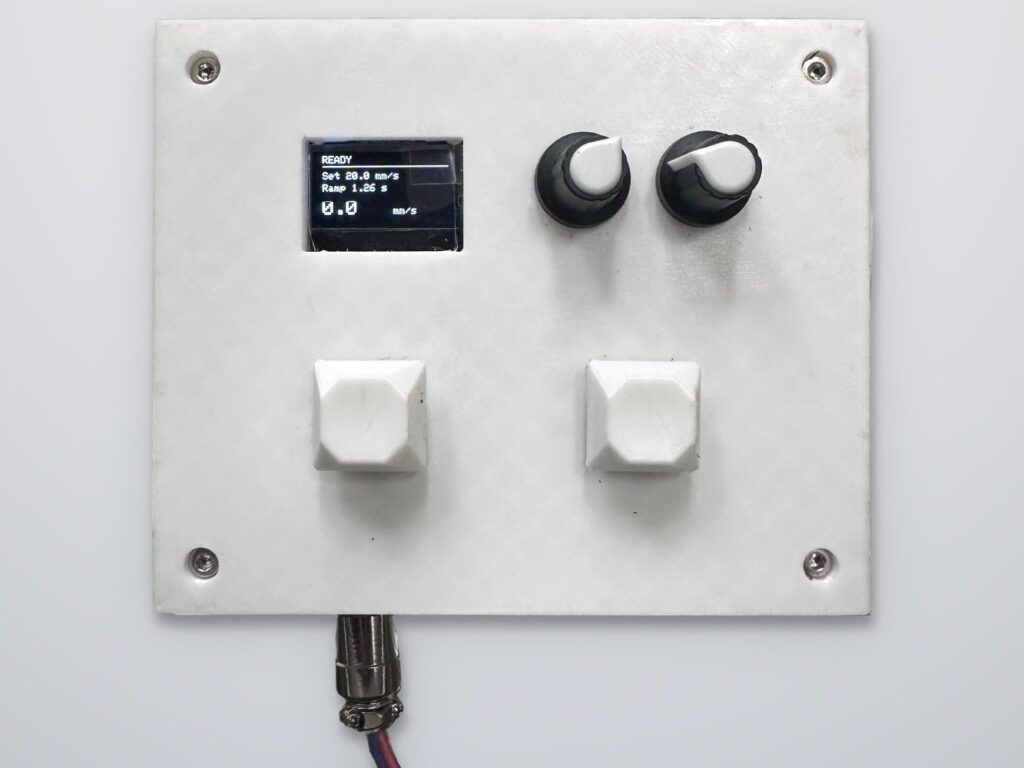
We also developed the control system using a stepper motor, a motor driver and an Arduino. The Arduino acts as a small standalone computer with a display that shows settings and operating speed, along with controls for movement, speed and acceleration. The idea is to use standard commercial CPT cones, including the CPTU cones we already have available.
One challenge I didn’t foresee was calibrating the rate of penetration, which is an important part of CPT testing. That’s still something we’re working through.
What stage is your project at now, and what's next?
We’ve got the core cone-pushing system working, but we still need to finish off the frame and get it out to site for testing. The first planned trial location is West Wallsend, where the team is already undertaking shear vane investigations.
If the concept proves valuable, we’d like to mount it on a small battery-powered tracked vehicle. That’d mean you wouldn’t have to push it around manually, and it could operate ahead of personnel on soft or marginal ground. The machine would likely have a lower ground pressure than a person walking across the surface, which could provide safety benefits as well.
There’s also potential to use what we’ve learnt in laboratory applications, particularly to investigate penetration rates in silts and unsaturated materials. We’d also like to explore incorporating vane shear testing, so the platform becomes more than just a cone pusher.
I’d estimate we’re still about a month or two away from taking the prototype into the field, but once we’ve completed testing, we’ll have a much better understanding of its potential applications and future development opportunities.