
By Kim Morrison, Chief Technical Officer, ATC Williams
Innovation in engineering and science is often associated with new technology: new software, new analytical methods, new equipment or new ways of designing and constructing infrastructure. But technology is only part of the story.
Some of the most meaningful advances in engineering and science begin much more simply.
➤
Someone encounters an unusual problem on a project.
➤
Another person has seen something similar elsewhere.
➤
A specialist challenges an established assumption.
➤
A lesson learned in one discipline changes the way another approaches a problem.
The challenge for a technical organisation is creating the environment in which those conversations happen deliberately rather than accidentally. That thinking has been central to the recent evolution of our Technical Communities at ATC Williams.
Creating communities around technical practice
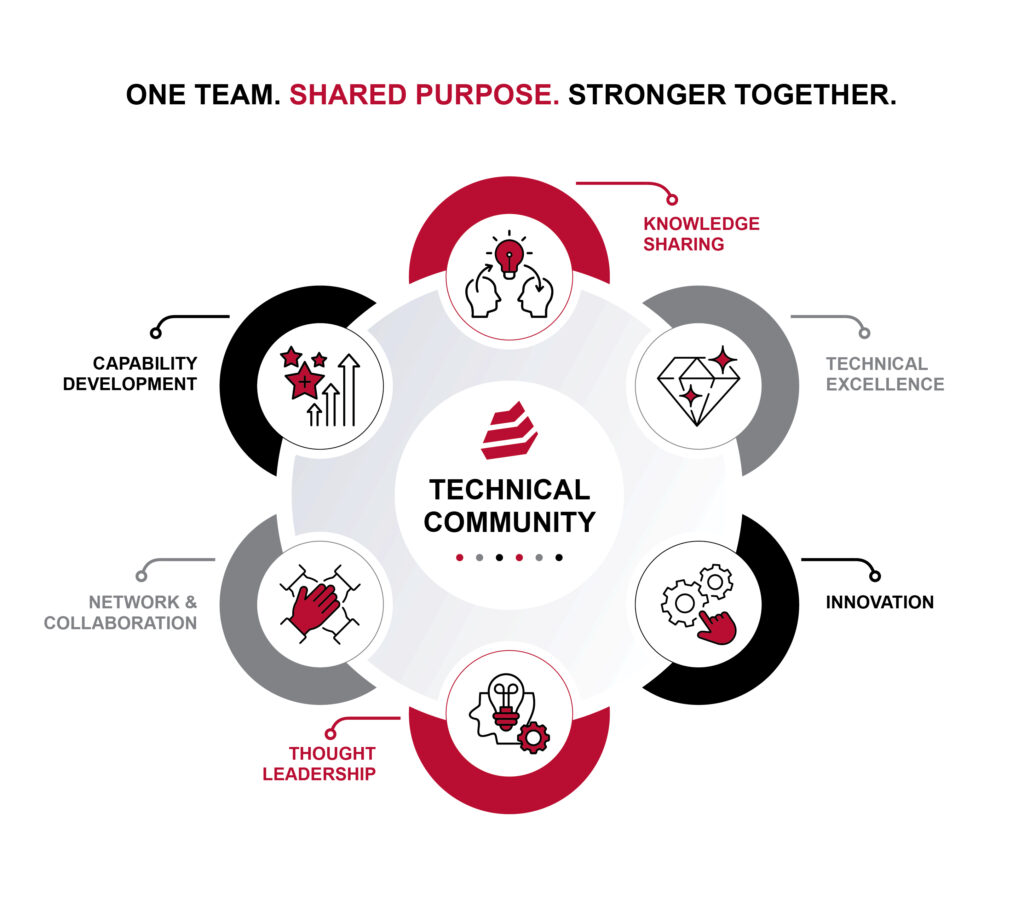
Our Technical Communities are discipline-based voluntary networks that promote knowledge sharing, technical excellence, capability development and innovation across ATC Williams.
Their role is broader than simply bringing people with similar skills together. They’re intended to connect people across our offices, share knowledge and good practice, build capability and strengthen consistency in the technical services we deliver.
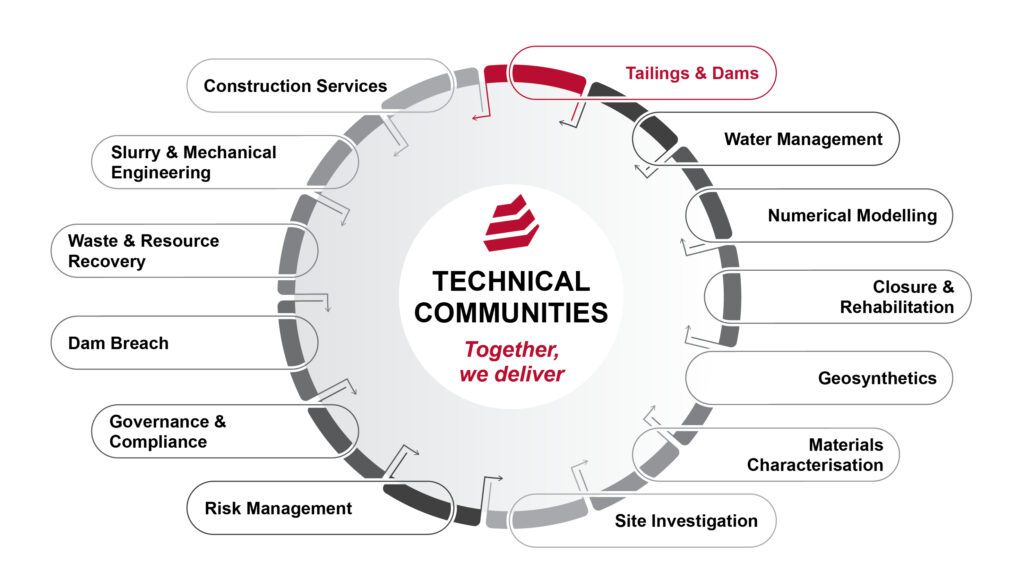
Over the past year, we’ve taken a close look at how these communities operate. Some areas had developed strong networks, while others represented relatively small groups of specialists. In some cases, the boundaries between communities were unclear, while opportunities for greater collaboration across disciplines became apparent.
That led us to restructure and relaunch our Technical Communities this year with clearer purpose, leadership and expectations.
Importantly, the objective was never simply to redraw an organisational structure. A Technical Community only creates value if people participate in it, and if that participation contributes to what we do. We’re starting to see some excellent examples of that happening.
From sharing knowledge to creating knowledge
Beyond sharing and strengthening existing technical knowledge, Technical Communities can also help us create new knowledge. When people working on similar problems can compare approaches, challenge assumptions and combine lessons from different projects, opportunities for technical improvement emerge naturally.
That progression is important:
Knowledge Sharing → Capability Building → Practical Application → Innovation.
It’s much easier for innovation to become part of everyday engineering practice when those steps are connected.
Building a technical ecosystem
This is why I increasingly see our internal initiatives as parts of a connected technical ecosystem rather than as standalone programs:
- ATCU develops our people
- Technical Communities connect them and strengthen good practice
- Thought Leadership and our Annual Technical Seminar share their knowledge more broadly
- AI helps accelerate learning and application
- Our Technical Innovation Contest creates opportunities to challenge current practice and explore what might come next.
None of these mechanisms is sufficient on its own. But collectively, they create something much more powerful: an environment in which technical knowledge can move across offices, disciplines, projects and generations.
The power of community
The strongest technical organisations are not necessarily those with the greatest number of individual experts. They are those that know how to connect their experts, develop the people around them and make their collective knowledge accessible. We have outstanding technical practitioners across ATC Williams. Our opportunity is to ensure their experience does not remain confined to a particular project, office, discipline or individual.
When we create the right connections, a lesson from one project can improve another:
- A specialist capability can become an organisational capability.
- A question raised in one community can spark collaboration with another.
- An idea shared between colleagues can ultimately develop into a new way of solving a problem.
That’s where community becomes capability, and capability creates the opportunity for innovation.